Chinese New Year Calligraphy: Write 新年快乐, 恭喜发财 and 福
Learn 新年快乐 and 恭喜发财, explore the upside-down 福 tradition, and choose a script for New Year calligraphy cards, festive decorations and personal greetings.
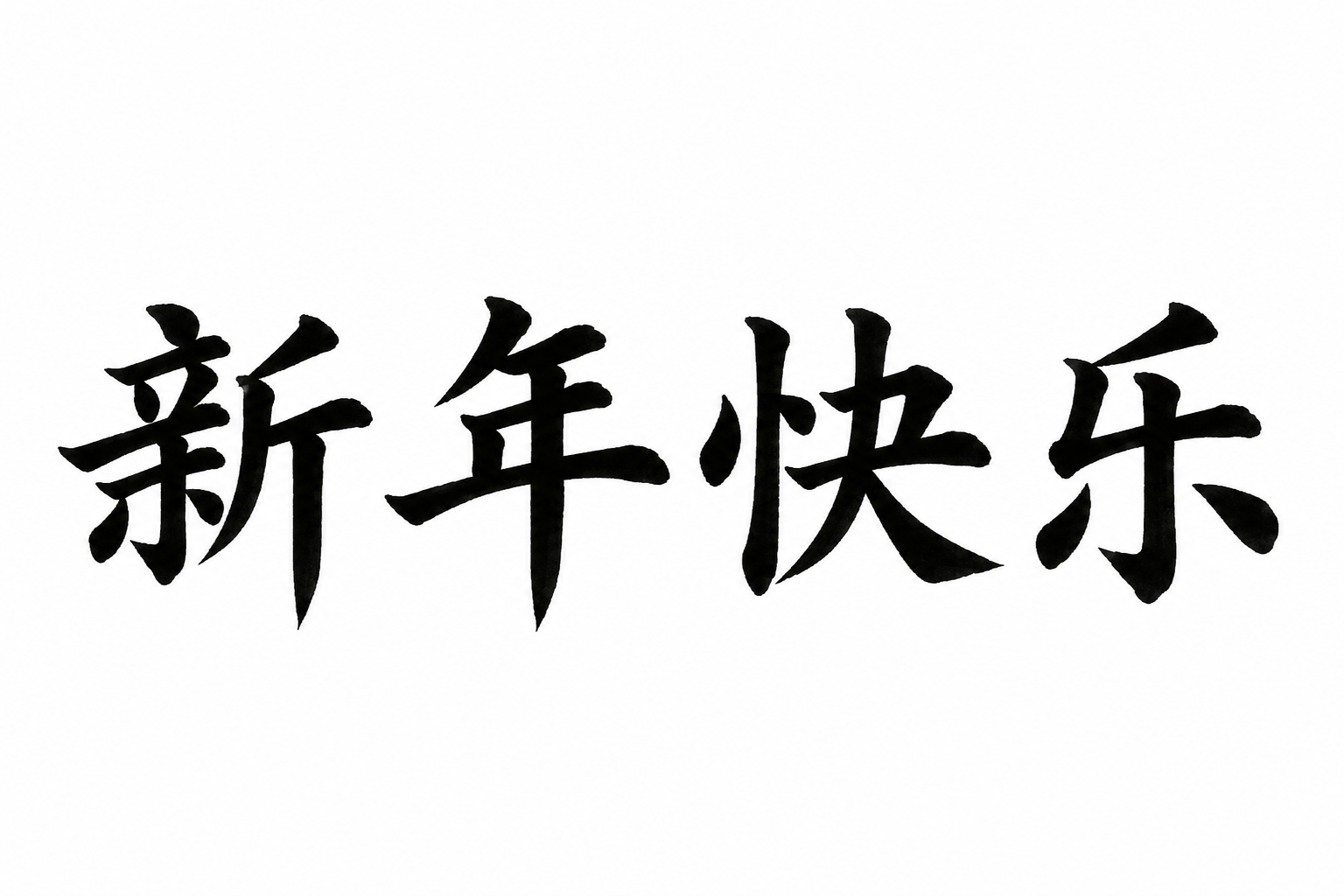
Happy New Year in Chinese is 新年快乐, Xīnnián kuàilè; 恭喜发财, Gōngxǐ fācái, is a wish for prosperity. For a Chinese New Year calligraphy design, choose the message first, then select a script and layout that make the characters readable.
Past campaign. This guide replaces an earlier New Year promotion. Previous rewards and redemption offers are no longer advertised here; check your account for current credit availability.
Understand the characters before you write
新年快乐 works as a general New Year greeting, including the Lunar New Year. 恭喜发财 is especially associated with festive wishes for prosperity; it is not a literal translation of “Happy New Year.” Copy your chosen phrase into the Chinese calligraphy generator, keeping the spelling you intend to show.
- 新 — xīn: new. It describes the year that is beginning.
- 年 — nián: year. Together, 新年 means New Year.
- 快 — kuài: part of 快乐, happy or joyful, rather than a request to be quick.
- 乐 — lè: joy in this phrase. Traditional writing uses 樂, giving 新年快樂.
- 恭 — gōng: respectful. It forms the congratulatory expression with 喜.
- 喜 — xǐ: happiness or congratulations in 恭喜.
- 发 — fā: to develop or become, within the expression 发财. The traditional form is 發.
- 财 — cái: wealth. 发财 means to prosper; traditional writing gives 恭喜發財.
Keep the greeting intact. Mixing one character from each phrase does not create an equivalent wish. For a gift, use a phrase that fits the recipient rather than choosing a character only because its silhouette looks attractive.
Why is 福 sometimes displayed upside down?
福, pronounced fú, means blessing or good fortune. In Mandarin, saying that 福 is upside down uses dào, which sounds like the word for arriving. An upside-down 福 can therefore suggest that good fortune has arrived. The Confucius Institute for Scotland describes this festive practice and its use on square red paper.
Treat this as a custom, not a universal rule for every household, location or language community. If you are preparing a decoration for someone else, ask how they prefer to display it. You can keep 福 upright in the artwork and decide its orientation when placing the decoration. Do not invert an entire greeting or a pair of couplets simply because an upside-down 福 is familiar.
Scripts and settings for Spring Festival couplets
Regular script for an easy-to-read entrance
Regular script, kaishu, is a helpful starting point for a legible greeting or a decoration viewed from a distance. Clear character structure is especially useful when the audience includes children or learners. A couplet consists of paired lines, not just two unrelated greetings. Check the wording, matching line lengths and intended placement with someone who understands the text before preparing a full doorway arrangement.
Running script for flowing festive wishes
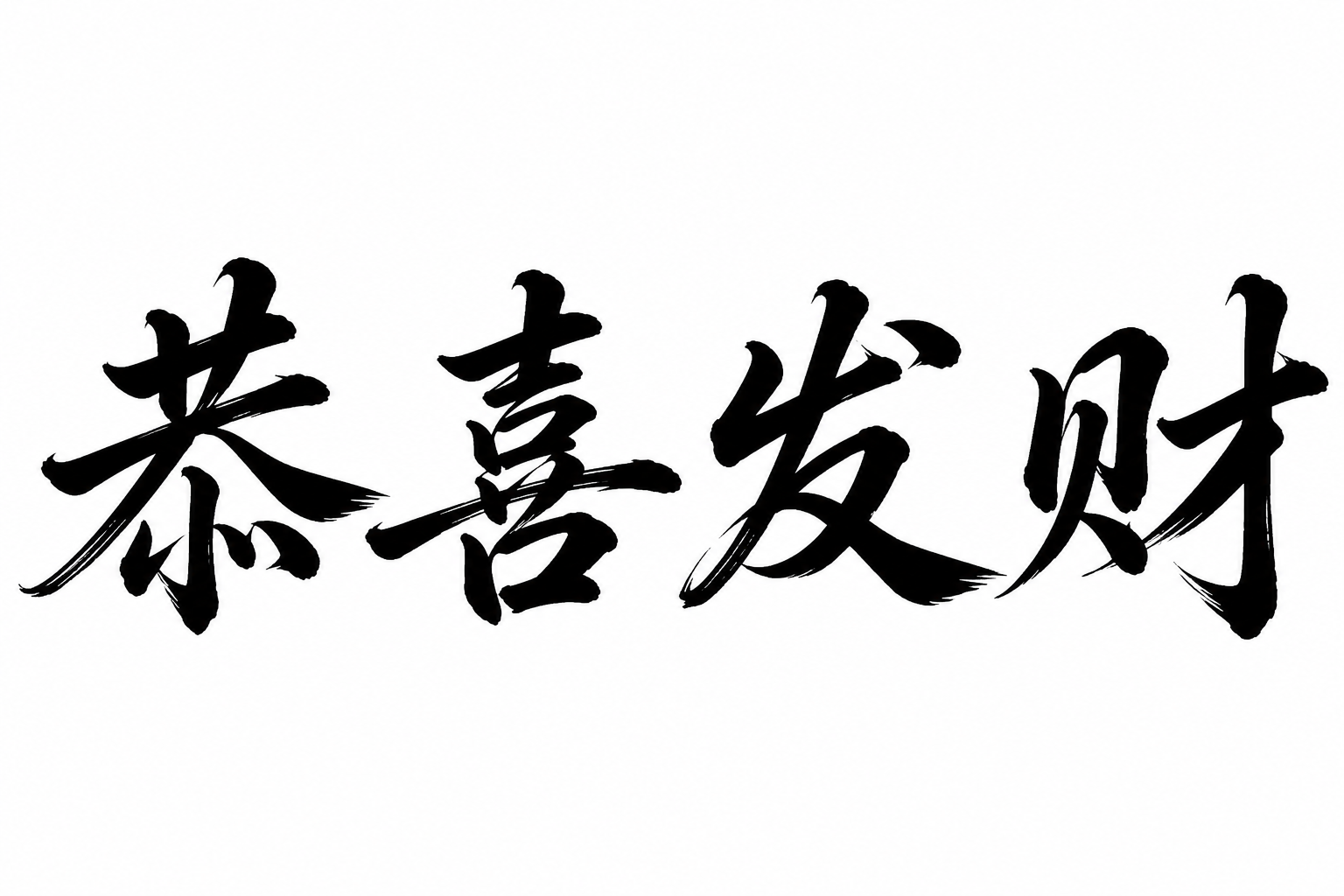
Running script, xingshu, offers movement with more recognizable structure than strongly cursive lettering. Try it for a short wish, a gift card or a festive print. Give each line breathing room and keep the same style across a pair. For a doorway project, create and review the separate parts rather than asking a small image to carry an entire complex arrangement.
Cursive script for a focal artwork
Cursive script, caoshu, can make a single 福 or a short greeting feel expressive. It is better suited to a focal decorative piece when visual rhythm matters, and may be difficult for some readers to decipher. Compare the result with your exact input. AI-created brushwork is not a reference for correct stroke order, and an elegant image can still contain a wrong character.
Six New Year lettering ideas
The first two images are AI-generated editorial examples of 新年快乐 in regular script and 恭喜发财 in running script. The remaining four are font-based composition studies illustrating colour and spacing, not generated customer results or authoritative historical-script examples. The third uses Ma Shan Zheng; the last three use Zhi Mang Xing. The showcase offers more artwork inspiration.


Create a greeting in three steps
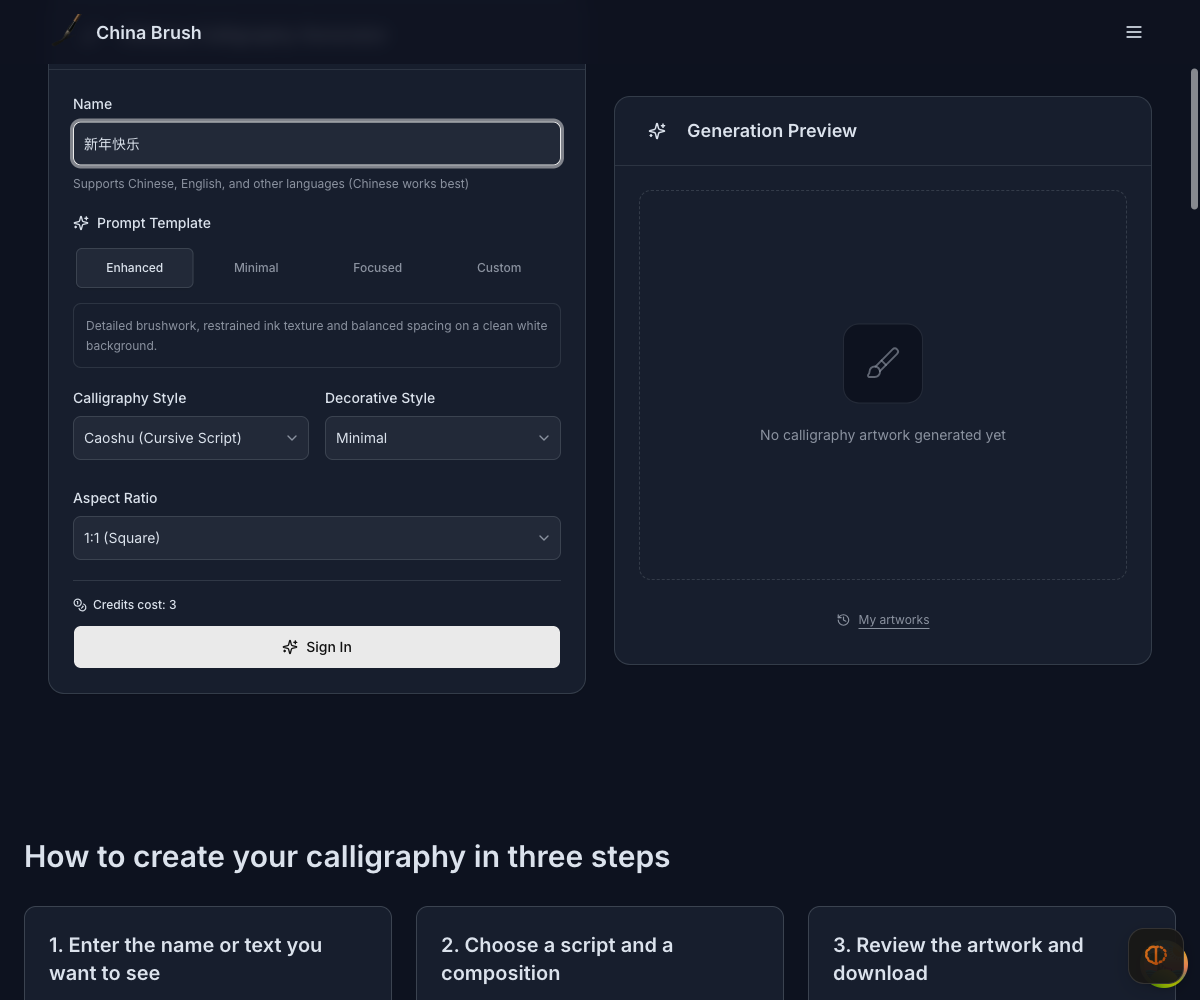
1. Enter your chosen text
Start in the AI calligraphy generator with 新年快乐, 恭喜发财 or 福. Use traditional characters if that matches the recipient’s preference. You may enter a name instead, but the tool does not translate it into Chinese. Short inputs make it easier to inspect every character and leave more space in the composition.
2. Select a script and layout
Choose regular script for clarity, running script for movement, or cursive for an expressive direction. Then choose a format suitable for a card, wallpaper or decorative panel. Sign in and check the displayed credit cost before generating. If you are making multiple parts for a couplet arrangement, keep track of their text and orientation separately.
3. Check and download
Compare the generated text against the original. Inspect fine strokes and edges at the image’s actual size, download the version you want and test the layout before printing. Another generation consumes credits. Consult the credit packages when you want more attempts; the small credit pack can be used for calligraphy as well as personal seals.
Frequently asked questions
Is 新年快乐 only for Chinese New Year?
No. It is a general Happy New Year greeting and can be used for the calendar New Year as well. The surrounding imagery and occasion help explain which celebration you mean. For this page, the examples focus on Spring Festival decorations and wishes.
Does 恭喜发财 mean Happy New Year?
It is a congratulatory wish for prosperity, rather than the literal phrase Happy New Year. Choose it when that wish fits the occasion and recipient. 新年快乐 is the more direct wording when you simply want to say Happy New Year.
Must I hang 福 upside down?
No. Practices vary, and upright 福 is also used. The upside-down arrangement is associated with Mandarin wordplay about fortune arriving. Ask the recipient about their household’s preference rather than presenting one arrangement as obligatory.
Can the tool write a full pair of Spring Festival couplets?
You can request short text within the input limit, but the tool does not verify a couplet’s literary structure, parallelism or placement. Prepare and check the words first. Generate manageable parts, review every character and assemble the final arrangement with the correct orientation.
Can I try a greeting without paying?
You need to sign in and have enough credits. Complimentary credits, when present in your account, can be used toward the displayed generation cost. There is no redemption offer attached to this guide. Check your balance and the current packages rather than assuming that every retry is free.